Sell Your Diamond Ring for Cash:
What to Know Before You Sell
Can you sell a diamond ring online? Yes. Sell diamond rings through Sell Your Gold's nationwide mail-in appraisal process. We purchase eligible natural-diamond engagement rings, wedding rings, anniversary rings, cocktail rings, and other diamond jewelry.
When you sell jewelry online, a professional evaluation should consider the complete ring. A diamond ring can have value in its center stone, accent stones, precious-metal setting, design or brand - not only its carat weight or metal content.
You can learn more about the diamond jewelry and loose diamonds we buy before requesting an appraisal.
IN SHORT The 4Cs help describe a diamond, but they are not the only factors that can affect an offer. Authenticity, diamond type, shape, grading documentation, condition, market demand and the ring's setting may also matter.
What Determines the Value of a Diamond Ring?
There is no single price that applies to every diamond ring. Even rings that look similar can receive different offers because their diamonds, settings, and market characteristics differ.
The 4Cs of Diamond Quality
The Gemological Institute of America developed the 4Cs as a common framework for describing diamond quality: carat weight, cut, color and clarity. Each factor should be considered together with the others.
| Factor | What it means | How it may affect an evaluation |
|---|---|---|
| Carat weight | The diamond's weight, not its visible size. One metric carat equals 200 milligrams. | Larger diamonds can be more valuable, but value does not increase by weight alone. |
| Cut | The craftsmanship, proportions and facet arrangement that influence how a diamond interacts with light. Cut is not the same as shape. | Cut quality, polish and symmetry can affect appearance and market demand. A formal GIA cut grade applies to standard round brilliant diamonds. |
| Color | For diamonds in the GIA D-to-Z range, color grading measures the relative absence of color under controlled conditions. | Color can affect quality and demand. Fancy-color diamonds are evaluated differently, so 'less color is always better' is not a universal rule. |
| Clarity | The presence and visibility of internal inclusions and external blemishes, including their size, number and location. | Clarity characteristics can affect appearance, durability, grade and demand. |
For the technical standard behind these terms, see GIA's overview of the 4Cs of diamond quality.
Factors Beyond the 4Cs
The 4Cs describe important quality characteristics, but a buyer may also consider:
- Whether the stone is a natural diamond, lab-grown diamond or diamond simulant
- Diamond shape and measurements
- A grading report from a recognized laboratory, when available
- Fluorescence, treatments and other identifying characteristics
- Chips, abrasions, wear or damage
- Current wholesale and secondary-market demand
- Designer, antique or estate characteristics
- The type, purity, weight and condition of the ring's metal setting
- The number and quality of any accent diamonds or gemstones
Two diamonds with the same carat weight can therefore have different values, and two complete rings with similar center stones can receive different offers.
Learn more about how Sell Your Gold calculates an offer.
Does the Ring Setting Affect Value?
Yes. A diamond ring should be evaluated as both a gemstone item and a piece of jewelry.
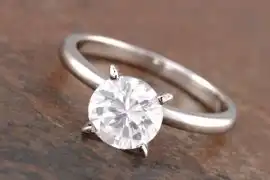
The setting may add value when it contains gold, platinum or another eligible precious metal. Its purity, precious-metal weight and condition may be considered separately from the diamond. Additional diamonds, and brand may also contribute to an offer when relevant.
Sell Your Gold also evaluates many other types of fine, estate and precious-metal jewelry.
Do You Need a Diamond Certificate to Sell a Ring?
No. A diamond ring does not need a grading report or certificate before it can be evaluated.
If you already have a laboratory grading report, receipt, insurance appraisal, designer documentation or original packaging, keep it with the ring and include it when appropriate. Documentation can help identify the item, but it does not guarantee a particular offer and does not replace professional examination.
Do not pay for a new grading report solely because you plan to sell without first considering whether the potential benefit is likely to justify the cost and time.
How Should You Prepare a Diamond Ring for Appraisal?
A diamond ring generally does not need to be repaired or professionally cleaned before appraisal. To protect the item and preserve potentially useful characteristics:
- Photograph the ring and any identifying marks before packing it
- Keep grading reports, receipts and original packaging with the ring when available
- Do not remove the center diamond or accent stones from the setting
- Do not resize, polish or repair the ring before evaluation
- Avoid acid, scratch or other destructive at-home tests
- Avoid harsh cleaners when the ring's stones or metal are unknown
If the ring is an engagement ring, you may also want to review the focused guide to selling an engagement ring.
How to Choose a Diamond Ring Buyer
Before sending a diamond ring to an online buyer, confirm that the buyer can evaluate both the diamond and the setting. Compare:
- Diamond and jewelry appraisal experience
- Authentication and examination methods
- Whether the complete ring is evaluated, including its setting and accent stones
- How grading documentation is used
- Shipping, tracking and insurance protections
- The deadline and cost for declining an offer
- Payment methods and the timing of payment issuance
- The exact eligibility requirements for any guarantee
- Independent customer reviews and business reputation
Compare actual written offers for the same ring rather than relying on claims about retail price, an insurance appraisal, advertised payout percentages, or an unqualified promise of the 'highest offer.'
You can also review why customers choose Sell Your Gold, including information about the appraisal process, security procedures, reviews and payment options.
How to Sell a Diamond Ring With Sell Your Gold
Sell Your Gold provides a mail-in appraisal process for customers who want to sell an eligible diamond ring from home.
-
Request Your Free Appraisal Kit
Request a free Sell Your Gold Appraisal Kit. There is no cost to request a kit, and requesting one does not commit you to sell your ring.
-
Ship Your Ring Securely
Package the ring according to the provided instructions and use the prepaid, insured, and trackable FedEx shipping label.
Qualifying shipments include standard protection against loss or damage for up to $5,000 when Sell Your Gold's required shipping procedures are followed. Additional insurance coverage of up to $500,000 is available for qualifying shipments with prior approval and compliance with the provided instructions.††
Review the packing and shipping instructions and call (888) 465-3860 before shipping if you need additional coverage.
-
Receive a Professional Evaluation
After the shipment arrives, the ring is documented and evaluated by Sell Your Gold's GIA-educated appraisal professionals. Depending on the item, the evaluation may consider:
- Diamond authenticity and type
- Carat weight, cut, color and clarity
- Shape and measurements
- Condition and identifying characteristics
- Available grading reports or documentation
- Current market demand
- The precious-metal content of the setting
- Accent stones, brand, design and other item-specific characteristics
This is an evaluation for a purchase offer, not a laboratory grading report or retail replacement appraisal.
-
Review Your Offer
In general, Sell Your Gold provides an offer within one business day after receiving your merchandise. Review the offer promptly and decide whether to accept or decline it within the deadlines in the Terms and Conditions.
If you accept, Sell Your Gold will issue payment within one business day using your selected method: ACH transfer, PayPal or company check. Actual delivery time can vary by method, provider and financial institution. If you decline within 10 days of receiving the offer, Sell Your Gold will return eligible merchandise at no charge, subject to the Terms and Conditions.
See the complete explanation of how selling with Sell Your Gold works.
Frequently Asked Questions About Selling Diamond Rings
-
Can I sell a damaged diamond ring?
Yes. Sell Your Gold accepts diamond rings in any condition, including rings with bent bands, broken settings, damaged prongs, loose stones or visible wear. You do not need to clean or repair the ring before sending it. Our team will evaluate the diamond, precious-metal setting, brand, and any other relevant characteristics.
-
Can I sell a diamond ring without a certificate?
Yes. A grading report is not required. Include any documentation you already have, but do not remove the diamond from its setting or obtain a new report automatically.
-
Does Sell Your Gold buy lab-grown diamond rings?
Sell Your Gold currently doesn't buy lab-grown diamonds. Contact customer service before shipping if you are unsure whether your ring or any of its components qualify.
-
Should I remove the diamond before selling the ring?
No. Leave the diamond and accent stones in the setting. Removing them can damage the ring and prevent the buyer from evaluating the complete item.
-
How quickly will I receive an offer and payment?
In general, Sell Your Gold provides an offer within one business day after receiving your merchandise. After you accept, payment is issued within one business day. The time required for funds or a check to arrive depends on the payment method and provider.
-
What happens if I decline the offer?
With Sell Your Gold, there is no obligation to sell. If you decline, eligible items are returned free of charge, subject to applicable terms.
Ready to Find Out What Your Diamond Ring Is Worth?
Request a free Sell Your Gold Appraisal Kit to securely send your eligible diamond ring for professional evaluation.
Requesting an appraisal does not commit you to sell. If you decline within the applicable deadline, eligible merchandise will be returned at no charge, subject to the Terms and Conditions.††